Payment Alliances Modify Entry Routes in Regulated Poker Leagues and Live Table Venues
Jonas Bauer · Aug 14, 2026

Payment Alliances Modify Entry Routes in Regulated Poker Leagues and Live Table Venues
Payment partnerships have begun to change how participants reach licensed poker circuits and live table formats across multiple jurisdictions, with data from industry reports showing increased integration of banking solutions that streamline deposits and withdrawals. Observers note that these alliances connect financial providers directly with operators, which reduces friction during high-volume tournament entries and session starts at physical and hybrid venues.
Figures from the European Gaming and Betting Association reveal that collaborative payment systems accounted for over 35 percent of transaction volumes in poker-related activities during the first half of 2026, a shift driven by real-time verification tools and shared compliance frameworks. Those who track market movements point out that live table operators now embed these partnerships into their access protocols, allowing players to fund accounts without leaving the gaming floor or digital interface.
Expansion of Integrated Payment Networks
Operators in North American and European markets have formed ties with open banking platforms and digital wallet providers, which expands the range of accepted methods at poker circuits where entry fees often exceed standard limits. Research from the University of Nevada's gaming studies unit indicates that such networks cut average processing times by 40 percent compared to standalone systems, a development that supports larger field sizes in multi-day events scheduled through August 2026.
Live table formats benefit when partnerships enable instant balance updates, since dealers and floor staff can confirm funds without manual checks. Data compiled by the Canadian Gaming Association shows participation rates in regulated live poker rooms rose 12 percent year-over-year after similar integrations took hold in provincial venues last year.
Effects on Tournament and Cash Game Access
Tournament organizers report that payment alliances allow for pre-registration funding options that lock in seats hours or days ahead of start times, which spreads entry patterns more evenly across peak periods. One study from the Australian Institute of Criminology found that venues using partnered systems experienced fewer abandoned registrations, because players receive immediate confirmation rather than waiting for external approvals.
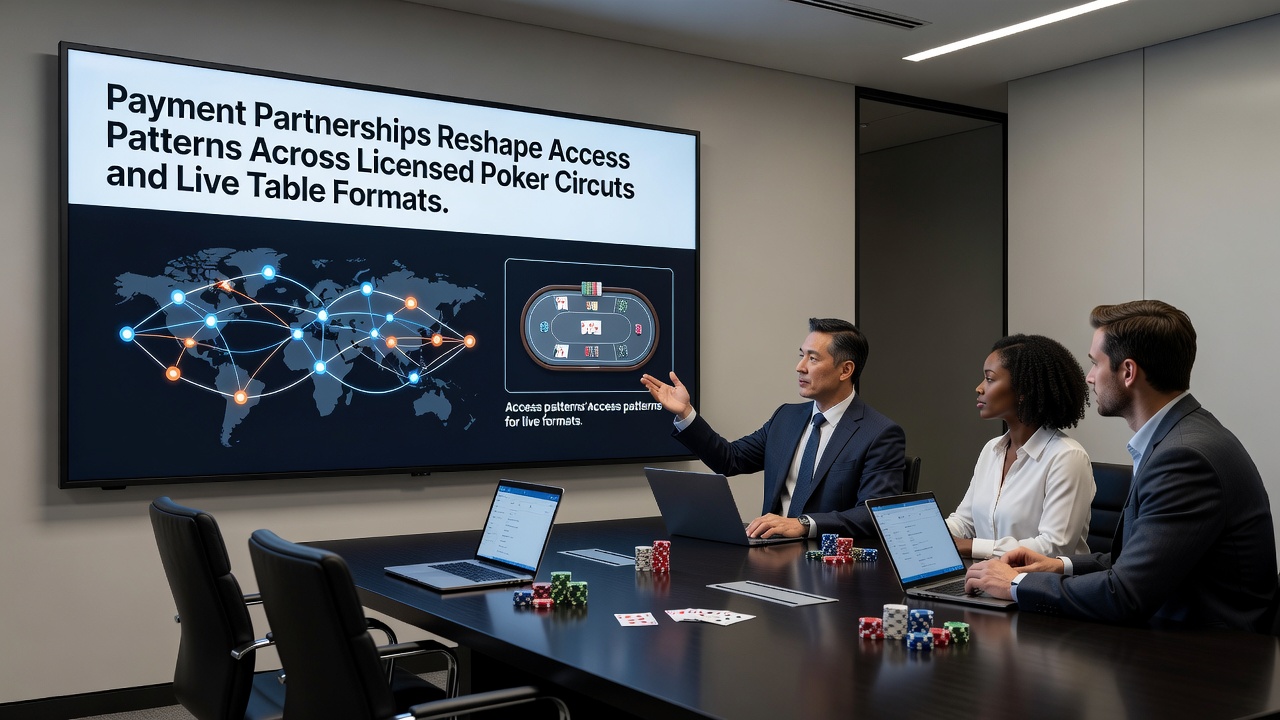
Cash game tables see parallel changes when alliances support micro-transactions for chip reloads, a feature that keeps sessions running without extended breaks. Experts at the World Lottery Association note that these capabilities align with broader regulatory expectations for transparent fund flows, which helps maintain licensing standards while accommodating higher table traffic.
Regional Variations in Implementation
In Asia-Pacific markets, partnerships with regional banks have introduced localized currency handling that reduces conversion delays at international poker festivals. Reports from the Singapore Tourism Board highlight how such arrangements supported record attendance at licensed events held in early 2026 by simplifying cross-border transfers for visiting players.
North American circuits, meanwhile, leverage alliances with established financial networks to meet state-level reporting requirements automatically, which cuts administrative overhead for operators running simultaneous live and hybrid tables. Those monitoring these trends observe that smaller venues gain the most, since they access enterprise-grade tools through shared provider agreements rather than building infrastructure alone.
Security and Compliance Considerations
Every partnership incorporates layered verification steps that align with anti-money laundering directives across jurisdictions, yet the process remains seamless for end users because the checks occur in the background. Industry data from the International Association of Gaming Regulators indicates that venues adopting these models recorded a 25 percent drop in disputed transactions during the second quarter of 2026.
Live table environments gain additional safeguards when payment confirmations sync directly with table management software, allowing supervisors to verify player eligibility without interrupting play. This integration supports continuous operation during extended cash game sessions where reload frequency stays high.
Conclusion
Payment partnerships continue to influence how players enter and sustain activity within licensed poker circuits and live table formats, with measurable effects on processing speed, attendance patterns, and operational efficiency. Data from multiple regulatory and research bodies shows consistent growth in adoption rates through mid-2026, driven by the practical advantages these collaborations deliver at both tournament and cash game levels.