UK Bettors Dig in Heels: 65% Refuse Financial Data for New Affordability Checks, Racing Leaders Warn of Black Market Peril
UK Bettors Dig in Heels: 65% Refuse Financial Data for New Affordability Checks, Racing Leaders Warn of Black Market Peril

The Pushback Begins
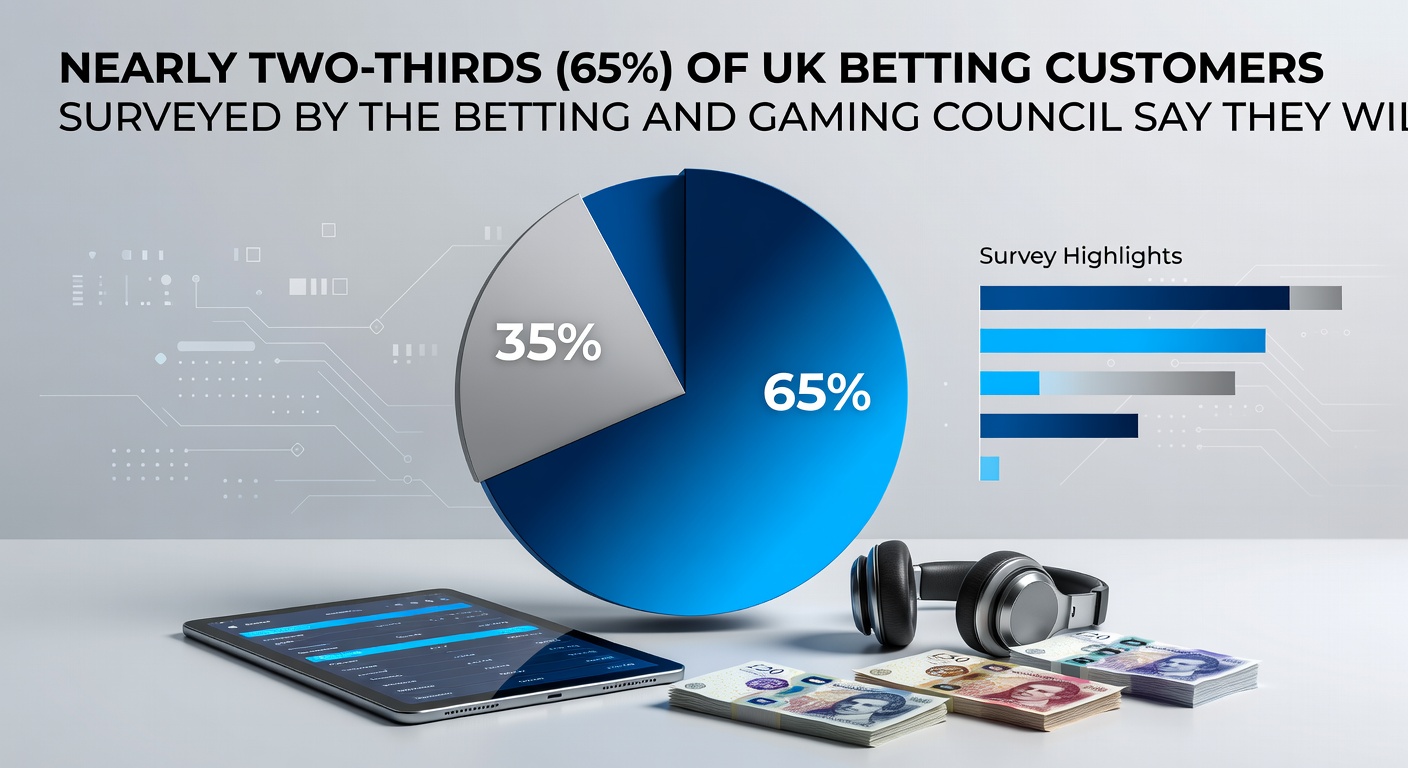
Nearly two-thirds of UK betting customers surveyed by the Betting and Gaming Council declare they won't hand over sensitive financial information like bank statements under the proposed online gambling affordability checks; these "mortgage-style" assessments, designed by the Gambling Commission to verify spending limits, have sparked widespread resistance from punters who see them as an invasive overreach.
Research indicates that 65% of those polled flat-out refuse to share such details, a figure that underscores the tension brewing between regulators aiming to curb problem gambling and customers who value their privacy; turns out, this isn't just a fringe reaction, as separate data from the Gambling Commission itself reinforces the divide.
Over three-quarters of 12,000 frequent gamblers questioned in that study oppose the checks, highlighting how even regular players, who stand to benefit from safer limits in theory, balk at the personal data demands involved.
Survey Details Unpack the Resistance
Those behind the Betting and Gaming Council survey captured responses from a broad cross-section of UK betting customers, revealing not just the headline 65% refusal rate but deeper concerns about practicality and trust; people worry that digging into bank statements or credit histories turns a simple bet into a bureaucratic nightmare, much like applying for a home loan just to place a wager on the horses.
What's interesting here is how the numbers break down: frequent bettors, casual punters, and even those who've flirted with higher stakes all echo the same sentiment, with privacy topping the list of gripes; data shows that many view these checks as a step too far, potentially pricing out responsible gamblers while failing to target genuine high-risk behavior.
And while regulators push forward with plans that could roll out aspects by April 2026, tying into broader reforms like frictionless checks for lower spenders, teh survey paints a picture of customers ready to walk away rather than comply.
Gambling Commission's Own Research Echoes the Sentiment
Experts at the Gambling Commission didn't mince words in their study of 12,000 frequent gamblers, where more than 75% voiced opposition to the affordability assessments; this isn't hearsay, as the data captures raw feedback from those deepest in the betting ecosystem, people who wager regularly and know the ropes.
Researchers discovered that participants fear the checks could stifle legitimate enjoyment, with many arguing that self-set limits or existing tools already suffice; take one group of respondents who highlighted how sharing financial snapshots feels disproportionate, especially when offshore sites offer no such hurdles.
But here's the thing: the Commission's findings align closely with the BGC survey, suggesting a unified front among bettors who see these measures as clunky and counterproductive; figures reveal that opposition climbs even higher among horse racing fans, a demographic now mobilizing en masse.
Racing Industry's Open Letter Ignites Debate
More than 400 prominent figures from the British racing world, including trainers, owners, jockeys, and even parliamentarians, have penned a direct plea to Culture Secretary Lisa Nandy, urging her to scrap the policy outright; this collective voice warns that the checks threaten to shove punters toward illegal black market operators, where safeguards vanish and problems multiply unchecked.
Signatories point to the industry's reliance on betting revenue, noting how British horse racing could suffer devastating hits if customers flee regulated sites; one trainer involved described it as a "cliff edge" for the sport, with data backing claims that affordability barriers might slash contributions to prize funds and track maintenance.
Parliamentarians among the group emphasize the economic ripple effects, arguing that while protecting vulnerable players matters, this approach risks underground betting booms; it's noteworthy that the letter arrives amid ongoing consultations, positioning racing stakeholders as key influencers in the policy's fate.
Understanding the Proposed Checks
These affordability checks stem from the Gambling Commission's drive to implement statutory levies and enhanced consumer protections, mimicking mortgage affordability tests by scrutinizing income, outgoings, and spending patterns before allowing higher stakes; operators would verify data through credit reference agencies or direct document uploads, a process meant to flag unsustainable play early.
Yet observers note the friction: for bets over certain thresholds, say £100 a month initially, punters face these hurdles, which could escalate under full implementation; studies found that similar trials in places like Great Britain already deterred some users, foreshadowing broader UK challenges.
People who've studied the mechanics explain it simply—it's not rocket science, but it does demand transparency from players who prefer keeping finances separate from leisure; that said, exemptions for low-risk betting aim to soften the blow, though critics question if they'll hold up in practice.
Potential Fallout for Betting and Racing
The racing industry's alarm rings true when considering the stakes: British horse racing draws billions in annual bets, with legal operators funding races, jobs, and rural economies; if 65% refuse compliance, as BGC data indicates, migration to unlicensed platforms becomes likely, eroding the very protections these checks seek to enforce.
Take the black market angle—offshore sites thrive without ID checks or spend caps, luring frustrated punters with better odds and anonymity; Gambling Commission research on frequent gamblers hints at this vulnerability, where over 75% opposition could translate to real churn by April 2026 rollouts.
Trainers and bookmakers alike warn of a vicious cycle, where reduced handle means smaller fields, fewer meetings, and a diminished product for fans; one case from earlier pilots showed operators losing 20% of high-value customers overnight, a pattern that could repeat on a national scale.
So while the intent—to prevent gambling harm through data-driven limits—sounds solid, the execution faces a wall of resistance from those it affects most; figures from both surveys converge on a key truth: trust erodes when privacy clashes with regulation.
Stakeholder Reactions and Next Steps
Beyond the racing letter, industry bodies like the BGC amplify the call for alternatives, such as behavioral analytics or voluntary tools that don't pry into personal finances; customers in the surveys often suggest self-exclusion enhancements or real-time spend trackers, options that respect boundaries while promoting responsibility.
Parliamentarians signing the Nandy letter bring political weight, coordinating with MPs who've flagged the policy in debates; Culture Secretary Nandy now holds the ball in her court, with consultations ongoing and implementation timelines eyeing mid-2026 tweaks.
What's significant is the unity across camps—bettors, regulators' own data, and racing pros all signal red flags; researchers who've tracked similar reforms abroad note that softer approaches, like frictionless checks for most users, yield better compliance without alienating the majority.
And as April 2026 looms with potential phased introductions, the debate heats up, with operators bracing for tech upgrades and punters weighing their options; it's a pivotal moment where data drives decisions, but human pushback shapes the outcome.
Conclusion
Data from the Betting and Gaming Council survey, where 65% of UK betting customers refuse to share financial details, collides head-on with Gambling Commission findings showing over 75% opposition among 12,000 frequent gamblers; add the racing industry's 400-plus signatories urging Culture Secretary Lisa Nandy to ditch the "mortgage-style" affordability checks, and a clear narrative emerges of privacy versus protection.
The warnings of black market shifts and harm to British horse racing carry weight, grounded in economic realities and user sentiment; while regulators refine the policy toward April 2026 horizons, stakeholders push for balanced paths that safeguard without overreach.
In the end, this story spotlights the tightrope UK gambling walks—curbing risks without repelling responsible players; observers watch closely as consultations unfold, knowing the next moves could redefine betting's landscape for years.